All Posts By 60plus&lovinglife

A partner isn’t a project. If you need fixing, I promise there’s a YouTube tutorial for that. I’m not it!

There’s a quote attributed to Julia Roberts that has stuck with me:

“Women, you are not rehabilitation centers for badly raised men. It is not your job to fix him, change him, parent him or raise him. You want a partner, not a project.”

I wish every woman could have that stitched onto a pillow.

I once dated a man who fit this quote so perfectly it’s almost laughable now—though at the time, it was anything but funny. He came with all the hallmarks: emotional immaturity, no real sense of responsibility, and a streak of disrespect that he tried to mask as “just the way he is.” It quickly became clear that he wasn’t looking for a partner. He was looking for someone to manage his life, soothe his ego, and smooth over the chaos he created.

And here’s the thing: that dynamic is destructive. Not only because it drains your energy and peace, but because it quietly suggests that your role as a woman is to fix what someone else refuses to fix in themselves. That somehow, love means sacrifice on one side and comfort on the other.

Thankfully, I have strong boundaries. I saw who he was early on and understood that if I stayed, I’d be stepping into the role of caretaker, parent, or project manager—not partner. And I refuse to shrink myself into a role I never signed up for. Walking away was not just self-respect—it was survival.

Women, hear me on this: if a man shows you who he is, believe him. If he needs therapy, guidance, or growth, that is his responsibility—not yours. You are not a rehab facility for his lack of effort, accountability, or respect.

Healthy relationships are built on reciprocity, not rescue missions. You deserve a partner who meets you as an equal, not a project that drains you.

Listen closely: if he needs fixing, that’s his job. If he needs parenting, that’s his family’s job. If he needs healing, that’s his therapist’s job. None of those are yours.

Your job is to protect your peace, honor your worth, and expect a partner who stands beside you—not one who drags you down and asks you to do the heavy lifting.

So the next time someone tries to hand you their broken pieces with the expectation you’ll glue them back together, remember: a partner shouldn’t be a DIY project. You want someone who shows up whole, not someone who expects you to build them from scratch.

So, love yourself enough to set boundaries, to say no, to walk away when someone expects you to fix what they won’t. Because the right partner won’t need you to save him—he’ll stand beside you, already whole.

image credit:dustick_Canva

Share this article

Who Really Gossips More? Spoiler: It’s Not Always Women

We’ve all heard the stereotype: women talk too much and women love to gossip. It’s been said so often that people treat it like fact. But here’s the truth I’ve noticed—men gossip just as much, if not more. And sometimes, they’re far harsher about it.

I once knew a man who was a world-class gossip. He had something to say about everyone in his circle of friends. It wasn’t just the occasional story—it was constant. And more than that, his gossip usually came wrapped in criticism. He’d tear people down behind their backs while smiling to their faces.

One story sticks with me. He spoke about one of his male friends, a guy who by all accounts was kind, considerate, and genuinely loving toward his girlfriend. In fact, he “doted” on her—showed her respect, care, and affection.

But instead of celebrating this, Gossip-Guy ridiculed him. He told his friend to stop being so nice to his woman because it made the rest of them look bad.

Let that sink in. A man was told to stop treating his partner well—not because it was wrong, but because it raised the bar for other men.

This is where gossip turns poisonous. It’s not harmless chatter—it’s policing behavior, reinforcing toxic norms, and dragging down the good examples because they challenge the status quo.

So, let’s call it like it is. Women don’t gossip more—humans gossip. And honestly? Some men could write entire soap operas out of the stuff they say (or even better, give me plenty of things to write about in my blog!)

The difference is, when women gossip, we get called out. When men do it, they high-five each other and think they are special. 🙄

So the next time someone says “women gossip too much”, just smile sweetly and say: “Sure, darling. And men don’t complain, they just… narrate.”

image credit: canva creative studio

Share this article

The Bare Minimum Isn’t a Key—It’s a Lock

I once knew a man who proudly told me he had “cracked the code” when it came to relationships. According to him, he’d figured out how to keep a woman. His so-called secret?

Do just slightly better than terrible.

That was it. His philosophy was that the bar for men is set so low that if he treated women just a little better than his male friends—who often treated their partners poorly—then women would cling to him. Not because he was actually loving, respectful, or invested, but because compared to what they had before, he looked like a prize.

He called this his “key” to holding onto a woman. He wore it like a badge of honor, bragging about how little effort he actually had to put in.

And let’s be clear: that’s not clever. That’s not charming. That’s manipulative, lazy, and downright disgusting.

So, let’s list it plainly:

Why this man is a heinous piece of garbage:

  • He exploits pain. Instead of wanting to uplift women, he counts on their history of being mistreated to make himself look better. That’s predatory.

  • He romanticizes the bare minimum. Respect, honesty, kindness, and effort aren’t extraordinary acts—they’re the basics of being a decent human being. He turned “slightly better than awful” into a game plan.

  • He thrives on comparison, not character. His worth as a partner is measured only by being “less bad” than the men around him—not by being good in his own right.

  • He mocks women’s standards. By banking on the idea that women will settle for crumbs, he reveals how little he actually values women’s happiness.

  • He avoids accountability. Real effort, growth, and emotional investment? Too much work for him. Instead, he settles for shortcuts and then calls it genius.

  • He reduces women to objects. His entire approach treats women not as equal partners, but as things to acquire and keep. That alone says enough.

Here’s the truth: A relationship built on the bare minimum is a relationship built on sand. It might hold for a while, but eventually it crumbles. Because women are not desperate for scraps—they’re deserving of love, respect, effort, and partnership.

Men like him may think they’ve found a “key.” But really, all they’ve found is a lock—on their own growth, their own maturity, and their own chance at a real, healthy relationship.

And honestly? If the best thing you can brag about is being slightly better than awful… congratulations, you’ve proven exactly what you are.

image credit:canva_atvakola

Share this article

I’m Not Brave—I’m Just Living My Life


People often tell me I’m “brave” because I have cancer and I still go out in public. I get told it when I’m picking up groceries, meeting a friend for coffee, or even just walking down the street.

But here’s the truth: I’m not being brave. I’m just living my life.

Cancer doesn’t press pause on everything else. I still need food in the fridge. I still want fresh air. I still crave connection. What people see as bravery is, to me, simply doing what I can to hold onto normalcy. Because if I wait until I feel “better” or “stronger,” I might miss out on the life that’s still here for me to live.

I’m no braver than anyone else. I didn’t sign up for this journey. I didn’t choose it. And neither did the millions of others who face it every year. We just deal with what’s in front of us, one day, one hour, one breath at a time.

And something I’ve noticed—far too often—is how many people quietly pull me aside and say, “I had cancer too. But I didn’t tell many people. Just close family.”

They whisper it. Like it’s a secret. Like it’s something to hide.

That hurts.

Not because they didn’t tell people—they have every right to navigate their diagnosis in whatever way feels right to them—but because I hear the why.

They didn’t want to be treated differently.

They didn’t want the pitying looks or the awkward silence or to be defined by an illness. And so they kept quiet. And that tells me something important:

There’s still stigma around having—or having had—cancer.

Somewhere along the way, cancer became something people are scared to talk about. Something people feel they need to protect others from hearing. Something that changes how others see us. And that’s not okay.

The reality is, cancer touches so many lives. It’s not rare. It’s not shameful. It’s not a reflection of weakness or failure. It’s something that happens to people—mothers, fathers, sons, daughters, friends, coworkers—people who are living, loving, and doing their best just like anyone else.

We need to talk about it more. We need to normalize it. We need to make it safe for people to say, “I have cancer” or “I had cancer” without feeling like they’ll be viewed through a different lens.

Because people with cancer aren’t inspirational for going to the store or grabbing a coffee—they’re just people, continuing their lives however they can. And that shouldn’t be seen as exceptional. That should be seen as human.

So the next time someone opens up to you about their diagnosis, honour their honesty. Listen without pity. See them for who they are—not what they’re facing.

And if you’ve been through cancer yourself—whether you’ve shouted it from the rooftops or whispered it to only a few—you’re not alone. Your story matters. You shouldn’t have to carry it in silence.

Let’s change the conversation. Let’s strip away the stigma. Let’s create a world where no one feels like they have to hide what they’re going through.

Because strength isn’t in silence—it’s in honesty, in community, and in just getting through the day.

And that? That’s something we all share.

Share this article

The Strength in Showing Up

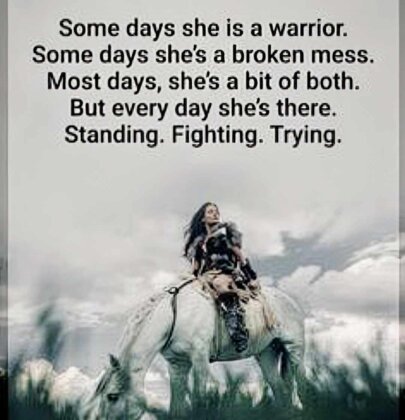
Some days, I am a warrior—fierce, determined, and unshaken. I take on whatever comes my way, pushing through exhaustion, doubt, and fear. On those days, I feel strong, like nothing can break me. I keep going, no matter what.

Other days, I am a mess—tired, overwhelmed, and unsure of everything. The weight of the world feels too heavy, and I struggle to find the energy to keep moving forward. On those days, I don’t feel like a warrior at all. But still, I get up.

Most days, I am both. A mix of strength and struggle, fire and fragility. I wake up not knowing which version of me will take the lead, but I show up anyway.

Because every day, I am here.

Standing.

Fighting.

Trying.

And that’s what matters. Not perfection. Not having it all together. Just the choice to keep going.

If today, you feel like a warrior—own it. If today, you feel like a mess—let yourself feel it. And if today, like most days, you are both—know that you’re not alone. Strength isn’t about being unbreakable. It’s about standing up, even when you feel like you’re falling apart.

So I’ll keep standing. I’ll keep fighting. I’ll keep trying. And I hope you will too.

imagecredit:power of positivity

Share this article

Riding the Waves of Treatment: My Journey with Aggressive Non-Hodgkin’s Lymphoma

Sometimes life throws you a curveball you never see coming. For me, that curveball hit in mid-November when blood tests revealed that my non-Hodgkin’s lymphoma had become aggressive, leading to serious issues with my liver and kidneys. The news was a lot to process: these vital organs were malfunctioning, and the cancer’s progression was deemed life-threatening.

I was admitted to the hospital immediately as a priority case. Within hours, I was on fluids, receiving anti-coagulant medications and steroids. My medical team told me I needed to start chemotherapy and immunotherapy within two days. The urgency was overwhelming, but I trusted the experts guiding me through this crisis. There wasn’t time to dwell on the fear; it was time to fight.

The Treatment Begins

Since then, I’ve undergone two cycles of chemo and immunotherapy, with four more to go. The treatments are intense, and the side effects have been challenging. One major change? All my hair has fallen out. Losing my hair was an emotional hurdle, but I’ve embraced the change. I’ve discovered the fun of wigs and turbans, and on early morning dog walks, I’ve been rocking the bald look. It’s surprisingly liberating.

Finding Strength in Support

Despite everything, I’m feeling better and incredibly optimistic. My haematologist’s confidence in my ability to go into remission after treatment has been a beacon of hope. Knowing that my hair will grow back is a small comfort in the grand scheme of things, but for now, I’m focusing on what truly matters: my health and the incredible people in my life.

I cannot overstate my gratitude for my stellar medical team. Their expertise and compassion have been extraordinary. I’m also endlessly thankful for my partner, my daughter, and my amazing friends who have rallied around me with love and care. They’ve brought meals, offered a listening ear, sat with me during chemo treatments, and reminded me every day that I’m not alone in this fight.

Staying Active and Positive

Even in the midst of treatment, I’ve made it a priority to stay as active as my body allows. I’ve scaled back my workouts at the gym, but I’m still moving, mostly yoga and light weights workouts. I walk, I dance, and I embrace every moment I can spend outdoors with my dogs. These activities help me feel more like myself and remind me of my strength.

Riding the Waves

This journey is undeniably tough, but it’s also shown me how resilient I can be. I’ve learned to take each day as it comes, riding the waves of treatment with hope and determination. There will be challenges ahead, but I’m confident that I can face them.

To anyone else navigating a similar path, know that you are stronger than you think. Surround yourself with a team—medical professionals, loved ones, and friends—who will lift you up. Take it one step at a time. And don’t forget to celebrate the small victories, because they add up.

Here’s to healing, to hope, and to the brighter days ahead. I’ll see you on the other side of remission.

my pink wig and party frock for our annual Christmas dance!


Share this article

Embracing Peace: Why Friendship Drama Becomes Less Appealing as We Age

As we journey through life, our priorities shift, and our perspectives evolve. One significant change many of us experience as we reach a certain age is a growing aversion to the drama often associated with some friendships.

I know that personally I ensure that if someone brings overwhelming stress to my table, they are no longer welcome. I can and I will prioritize myself and my personal well-being over the chaos of someone else’s chaotic life.

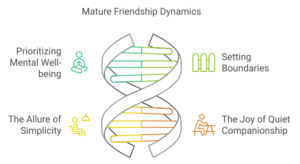
The Allure of Simplicity in Friendships

As we grow older, we begin to recognize that stressful friend dynamics can be draining.

We start to appreciate simplicity and authenticity in our relationships. The appeal of deep, meaningful connections becomes far more desirable than the fleeting excitement of drama.

Many individuals find themselves gravitating toward friends who bring positivity and support rather than those who contribute to stress and tension.

Prioritizing Mental Well-being Over Friendship Drama

As we mature, we face various life challenges—career pressures, family responsibilities, and health concerns. These factors heighten our awareness of mental health. We begin to understand the importance of surrounding ourselves with individuals who uplift us instead of those who bring drama into our lives.

Friendship drama can lead to anxiety, resentment, and emotional fatigue. As we age, we learn to prioritize our mental health and seek relationships that foster calm and support.

The desire for a peaceful life becomes paramount, and we become adept at recognizing friendships that enrich our lives rather than drain our energy.

Setting Healthy Boundaries in Friendships

Another vital aspect of this shift is the establishment of healthy boundaries. With age comes wisdom, and we learn that it’s acceptable to say “no” to relationships that no longer serve us.

We become more skilled at identifying toxic dynamics and are less inclined to tolerate behavior that disrupts our peace.

This doesn’t mean we abandon our friends when conflicts arise; rather, we approach friendships with a discerning eye. We understand that it’s okay to distance ourselves from those who thrive on drama or engage in constant negativity.

By setting boundaries, we create space for healthier, more fulfilling connections.

The Joy of Quiet Companionship

As we embrace this new phase of life, we often find joy in quieter, more stable friendships. These relationships are characterized by mutual respect, understanding, and a shared desire for peace. Activities like enjoying a quiet cup of coffee, going for a nature walk, or simply being in comfortable silence become cherished moments.

In this phase, we learn to appreciate the value of companionship without the need for constant excitement. The comfort of being with someone who understands us without the need for dramatic exchanges is a beautiful realization that often comes with maturity.

Finding Peace in Friendship

Reaching a certain age often brings a profound shift in our approach to friendships. The drama that once seemed thrilling can become burdensome, leading us to seek a quieter, more peaceful existence.

By prioritizing mental well-being, setting healthy boundaries, and embracing meaningful connections, we create a life that reflects our values and desires.

In the end, friendship, in its simplest form, is about connection—one that enriches our lives without the unnecessary chaos.

Embracing this phase can lead to deeper, more fulfilling relationships that nurture our souls and allow us to thrive in the serenity we crave.

Let’s celebrate this journey toward a peaceful life, where friendship drama becomes a distant memory, and tranquility reigns supreme. featured image credit:ktpaperdesigns

Share this article

you deserve to be happy!

What does a relationship mean to you?

For me, it’s being with someone who is my best friend and loved partner.

When you wake up and you’ve been holding hands during the night, because you always reach out for each other, even in sleep.

You both get up and it’s a fresh, bright and wonderful new morning, full of hope and possibilities.

You laugh and talk as you make breakfast together. Maybe pancakes or french toast with cinnamon sugar. Maybe eggs or porridge with honey and fresh berries.

And coffee, nice strong coffee.

It’s a special part of the day to share and it sets the tone for the rest of the day.

Do you go on a hike? Or go back to bed for a while? 😉 take the dogs for a walk or both head to the gym to workout.

The day can take any turn you like. But you’ve set a beautiful start.

That’s what my best friend and partner would want – with me and I with them 💕

My person willingly and happily shares the household labour, freeing us up to have more quality time together. Knowing that the chores do not belong to any one person.

My person would never expect me to bear more than my fair share of tasks, because love recognizes that both of us are contributing to something we wish to grow together.

There is no room for being selfish. But there is room to care for ourselves and each other.

He is intuitive and notices if I am down or feeling tired. We both will pick up more of the burden if we notice the other is not quite up to things. It’s nurturing and it’s empathy and it’s genuine love.

We are both ok with needing space and solitude sometimes and allowing each other that grace.

Loving someone is grace, kindness, laughter. It can also be less than that at times, because life is not always rainbows and unicorns.

But we know that and we accept each other and that is our love.

When times are tough, we pull together to work things out. No matter what, we have each other’s back.

For after all, we are kindred souls and we will never lose each other 💕

one can but dream…

imagecredit: specialsaying

Share this article

be wary of people who hate animals…

I’m always wary of folk that hate animals!

I dated a guy one time who hated animals (I know, right?!? what was I thinking?) He was an overall creep as well! Took a minute to figure it out, but I did.

He used to mock me for having a dog. Literally, he actually said “what 50 year old gets a dog?” Saying I was “pathetic.”

The thing is I have had dogs and cats my whole life since childhood. The one he was referring to I got when I was 52, my other dog was getting a bit old and I felt having a puppy would cheer her up, which it did (eventually!) My older dog passed a few years later and I swear having a younger dog around gave her more energy and pep!

Being with someone who despised animals was horrible. It was an experience that taught me more about human nature than I ever wanted to know.

I’m an animal lover. My dog isn’t just a pet; they’re family. They greet me with wagging tails and endless affection after a long day, offering unconditional love and companionship. So when I started dating this guy, I was excited to introduce him to my furry friend. Little did I know, that introduction would reveal more about him than any conversation ever could.

At first, he seemed indifferent about my dog. I brushed it off, thinking maybe he just wasn’t used to animals. But then the mocking started. He’d make snide remarks about how “pathetic” it was to be so attached to a dog. He’d laugh at the idea of someone finding comfort and joy in an animal’s company, saying it was “childish” and “ridiculous.”

His cruelty didn’t stop there. He’d deliberately antagonize my dog, teasing them in ways that were anything but playful. The more I saw this side of him, the more unsettled I became. His actions weren’t just a sign of disliking animals; they were a window into his twisted, cruel nature.

It wasn’t just about him not liking dogs—it was about the complete lack of empathy and compassion he showed. How could someone be so cold and heartless to a creature that only wanted to give love? The more time I spent with him, the more I realized he was a creep in every sense of the word. His disdain for animals mirrored a broader disdain for kindness and decency.

I’m so grateful to no longer have this excuse for a human in my life. Looking back, I can see how his attitude towards my dog was a massive red flag—a warning of the nastiness that lurked beneath the surface.

Here’s the thing: Animals bring out our softer sides. They remind us of the importance of care, love, and responsibility. If someone can’t appreciate that, if they respond with cruelty instead of kindness, it says a lot about who they are as a person.

So, here’s my advice: Never trust a person who hates animals. If they can’t show empathy for a creature that only wants to love and be loved, how can they possibly show it to another human being? Surround yourself with people who share your love and compassion for all living beings—it’s one of the best ways to ensure that you’re with someone who truly has a good heart.

As for me, I’m happy to have my dog by my side, a loyal companion who, unlike that guy, knows the true meaning of unconditional love

My now older dog is 13 and yesterday I rescued a pup to keep him company in his twilight years.

My new pup is 7 months old and she is gorgeous – look at those eyes!

picture of a black toy poodle

Her owner rejected her as she’d been bought to be a “show dog.” However, the pup has a little white fur on her chest and a tiny (genetic) kink in her tail, so she was disqualified at her first show.

That meant the owner didn’t want her anymore😢

This pup now has a warm and loving home with me! Her imperfections are cute as far as I’m concerned and she has settled beautifully into my home.

Even better, my current partner loves dogs and cats and is delighted with my little menagerie!💗

imagecredit:unkonfined

No tags

Share this article

We all have our battles: a Journey of Resilience and Connection…

I was chatting before class with one of my trainers at the gym. She was checking in with how I am travelling after my hectic health issues last year😊

I told her that the breast cancer is in remission; the non-Hodgkins Lymphoma is still “watch & wait” with 6 monthly check-ups; the Lymphocytic Colitis is mostly under control and I have my Cochlear implant in my left ear so hearing is awesome!

So this year is pretty good really.

She confided that she is feeling a bit unmotivated with life at the moment, but feels that when she hears about my journey that she has nothing really to worry about.

I told her that we all have our own things to deal with and to not feel that hers are any less valid. They are absolutely real for her and there are times we all feel unmotivated with life.

Life, in all its complexity, is a series of battles. Some days, the sun shines bright, and the path ahead seems clear. On others, the road is shrouded in darkness, and every step feels like an uphill climb.

Whether it’s relationship troubles, health issues, or the general malaise that sometimes settles in our souls, we all face challenges that test our strength and resolve.

But here’s the thing: it’s okay to struggle. It’s okay to feel lost, tired, or overwhelmed.

The important part is that we keep moving forward, even if it’s just one small step at a time.

I’ve come to understand that life isn’t about avoiding difficulties—it’s about how we respond to them. It’s about resilience, that quiet, persistent strength that keeps us going even when the odds seem stacked against us.

And while it’s essential to draw from our inner reserves, we also need to recognize the power of connection, of leaning on others when our strength wanes.

Lifting Each Other Up

No one is an island. We weren’t meant to walk this journey alone. Yet, how often do we hesitate to reach out, to ask for help, or to simply share what’s weighing on our hearts? We worry about being a burden, about showing vulnerability, about not having it all together.

But here’s the truth: we all have our moments of doubt and despair. When we share these moments with others, we often find that we are not alone in our struggles. Our friends, family, and even those who might just be passing through our lives for a brief time—they’ve been there too.

And in that shared understanding, we can find comfort and strength. There’s a profound power in lifting each other up. A kind word, a listening ear, a simple “I’m here for you”—these small gestures can make a world of difference. They remind us that we don’t have to carry our burdens alone.

Being Our Authentic Selves

Authenticity is one of the greatest gifts we can give to ourselves and to others. In a world that often pushes us to present a curated, polished version of our lives, being real can feel risky.

But it’s through authenticity that true connections are made. When we allow ourselves to be seen—flaws, scars, and all—we create space for others to do the same.

We open the door to deeper relationships, where we can support each other not just in our successes, but in our struggles too. Being authentic isn’t about oversharing or laying bare every detail of our lives; it’s about being true to who we are.

It’s about acknowledging our battles and facing them head-on, with the understanding that it’s okay not to have all the answers.

Checking In with Each Other

In the hustle and bustle of daily life, it’s easy to lose sight of the people around us. We get caught up in our routines, our to-do lists, our own worries. But it’s so important to take a moment to check in with those we care about.

A simple, “How are you, really?” can open the door to meaningful conversation and connection. It shows that we care, that we’re paying attention, that we’re here to support each other.

Sometimes, that check-in is all it takes to remind someone that they’re not alone in their battle.

Life is a journey filled with highs and lows, with triumphs and trials. We all have our battles, but we don’t have to face them alone.

By lifting each other up, being our authentic selves, and checking in with one another, we can create a community of support and love—a place where we can all find the strength to keep moving forward, one step at a time.

Let’s be there for each other. Let’s face our battles with courage and compassion. And let’s never forget the power of connection in this beautiful, messy journey called life.

Share this article